CARB Compliance Los Angeles & Riverside County, CA

Keep Your Truck Road-Legal Without the Downtime

Digital emissions testing for 2013 or newer heavy-duty trucks over 14,000 lbs GVWR. Fast OBD data download, submitted directly to California’s database, so you avoid DMV registration holds and keep rolling.
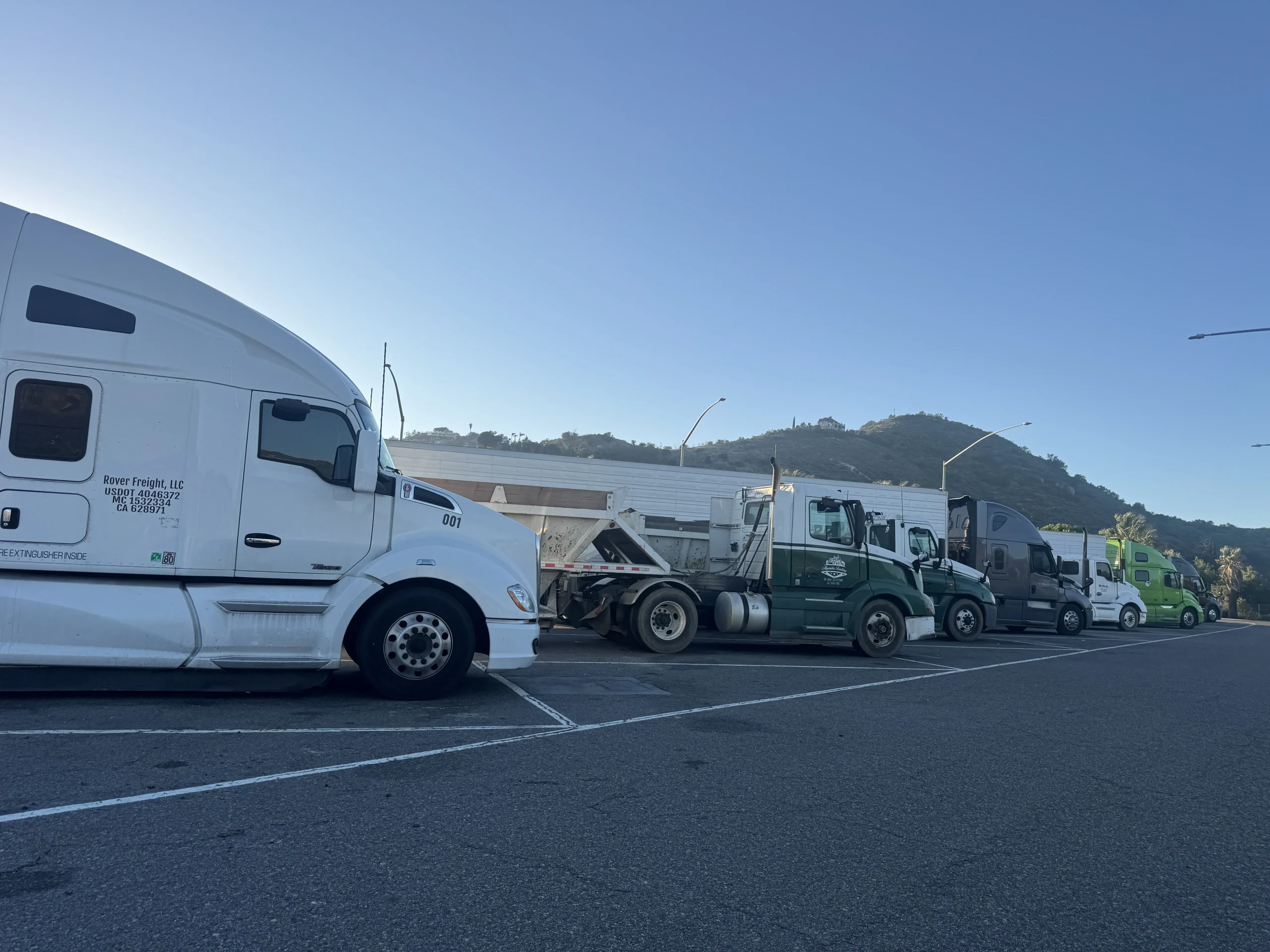
Several semi-trucks and trailers are parked in a row at a rest stop, with a hill and clear blue sky in the background. Mobile Clean Truck Check in LA & Riverside helps keep these rigs road-ready. The scene is calm and sunlit.

CARB Certified Testing Equipment

State-approved OBD devices download emissions data directly from your truck’s computer, meeting all California Air Resources Board standards.

Credentialed Testers on Staff

Our team holds valid CARB tester certifications after completing the official state training course and passing the required exam.

Direct CTC-VIS Submission

Test results are automatically uploaded to the state database, giving you proper compliance documentation without extra steps on your end.

Heavy-Duty CARB Emissions Testing California

Digital Testing for Trucks That Actually Need It

If you’re running a 2013 or newer heavy-duty truck with a GVWR over 14,000 pounds in California, you’re required to undergo Clean Truck Check emissions testing twice a year. This isn’t optional, and it’s not going away. The state uses roadside sensors to flag high emitters, and non-compliance means DMV registration holds, fines, and trucks sitting idle. SMOG Motors performs digital emissions testing by downloading data from your truck’s ECU and submitting it to the State of California’s CTC-VIS database. This is the modern testing method for OBD-equipped vehicles. No smoke tests. No taking your truck out of service for hours. Just the data California needs to keep you compliant.

Check Out Our Reviews!

All Smog Motors

Need a quick estimate?

Stay compliant and keep your trucks on the road with All Smog Motors. We specialize in CARB emissions compliance checks for heavy-duty trucks, making the process simple, fast, and stress-free. Whether you’re up against a registration deadline or received a notice to test, our certified team will handle your inspection accurately and efficiently so you can avoid penalties and costly downtime. Fill out the form below to schedule your compliance check today and keep your fleet moving without interruption.

Get a free quote

CARB Certified Smog Check Benefits

What You Actually Get From Staying Compliant

Beyond just checking a box, CARB compliance keeps your truck operating, your registration active, and your business moving without expensive interruptions or penalties.

Your truck stays road-legal in California, which means no enforcement citations during roadside inspections or CHP weigh station checks.
You avoid DMV registration holds that block renewal and effectively ground your vehicle until compliance is restored.
You’re protected from fines ranging from $1,000 to $10,000+ per vehicle per day for operating a non-compliant truck.
You maintain access to ports, freight terminals, and work zones that require proof of CARB compliance before entry.
Your test results are on file with the state, so if you’re ever flagged by roadside sensors, you have documentation.
You meet the twice-yearly testing requirement without pulling your truck off the road for traditional inspections.

Clean Truck Check Los Angeles

This Only Applies to Certain Trucks

Not every truck needs this service. CARB’s Clean Truck Check program applies specifically to heavy-duty diesel and alternative fuel vehicles with a GVWR over 14,000 pounds. If your truck was built in model year 2013 or newer, it’s equipped with an onboard diagnostics system that monitors emissions in real time. That’s the truck we’re talking about. Older trucks without OBD systems require opacity smoke testing and visual inspections instead. Lighter vehicles under 14,000 pounds GVWR fall under different regulations entirely. We’re not here to test everything. We’re here to handle the digital emissions testing for the trucks that actually need it 2013 or newer, over 14,000 pounds, operating on California roads. If you’re running one of these trucks in Los Angeles & Riverside County, CA, you’re required to test twice a year. Starting in October 2027, that requirement jumps to four times per year. The state isn’t loosening up on this. They’re tightening enforcement, adding more roadside sensors, and issuing more Notices to Submit to Testing. Getting ahead of it now saves you from scrambling later.

Digital Emissions Testing Riverside County

How Digital Testing Actually Works

Your truck’s computer already tracks emissions data. Every time the engine runs, the ECU monitors things like NOx levels, particulate matter, exhaust gas recirculation, and dozens of other parameters. That data sits in the system, ready to be pulled. We connect CARB-certified OBD testing equipment to your truck’s diagnostic port, download the emissions data, and submit it directly to California’s CTC-VIS database. The whole process takes minutes, not hours. There’s no need to take the truck to a shop, leave it overnight, or pull it off a job. You don’t lose a day of revenue to compliance. Once the data is submitted, the state analyzes it to determine if your emissions control systems are functioning properly. If everything checks out, you’re carb compliant. If there’s an issue—like a fault code or a system that’s not ready—you’ll know what needs attention before the deadline hits. This gives you time to make repairs without facing a registration hold or a Notice to Submit to Testing with a 30-day clock ticking.

Frequently Asked Questions

What trucks are required to get CARB compliance testing in California?
CARB’s Clean Truck Check program applies to nearly all diesel and alternative fuel heavy-duty vehicles with a gross vehicle weight rating over 14,000 pounds that operate on California public roads. This includes semi-trucks, commercial delivery vehicles, buses, motorhomes, and heavy-duty work trucks. If your truck is model year 2013 or newer, it’s equipped with an onboard diagnostics system and requires digital OBD testing. Older trucks without OBD systems need opacity smoke testing and visual inspections instead. The requirement applies whether your truck is registered in California or out of state—if you’re operating in California, you need to comply. The only exceptions are vehicles that travel less than 1,000 miles per year in California under the low-use exemption, or those that qualify for a temporary 5-day pass.
Most heavy-duty trucks are required to undergo emissions compliance testing twice per year under California’s Clean Truck Check program. For California-registered vehicles, your compliance deadlines are tied to your DMV registration expiration date. Out-of-state vehicles have deadlines based on the last digit of the vehicle identification number. You can submit a passing test up to 90 days before your deadline, which gives you a window to get it done without rushing. Starting in October 2027, OBD-equipped vehicles will be required to test four times per year instead of twice. Agricultural vehicles and California-registered motorhomes used for recreation have annual testing requirements instead of semi-annual. Missing a deadline results in a registration hold from the DMV, which means you can’t renew your registration until you’re compliant.
If your truck fails the emissions test, you’ll receive a detailed report explaining why. Common reasons include fault codes in the emissions control system, the check engine light being on, or OBD readiness monitors not being set. You’ll need to address the issue—whether that’s making repairs, clearing codes, or completing drive cycles to reset monitors—and then retest before your compliance deadline. If you miss your deadline entirely without submitting a passing test, the California DMV will place a registration hold on your vehicle. This means you cannot renew your registration until you become compliant. You also risk being flagged by CARB’s roadside emissions monitoring devices, which can trigger a Notice to Submit to Testing. Once you receive that notice, you have 30 days to submit a passing test or face fines and potential enforcement action. Non-compliance can also result in being denied access to ports, freight terminals, and certain work zones that require CARB compliance.
Yes. All heavy-duty trucks operating in California must comply with CARB regulations, regardless of where they’re registered. If you’re an out-of-state carrier running loads into or through California, your truck still needs to meet Clean Truck Check requirements. Your compliance deadlines are based on the last digit of your vehicle’s VIN rather than a registration renewal date. You’ll need to register your truck in California’s CTC-VIS database, pay the annual compliance fee, and submit passing emissions tests twice per year. If you only operate in California for short periods, CARB does offer a 5-day pass once per calendar year, but you must submit the request at least 7 business days before entering the state. For regular operations, it’s simpler to stay compliant year-round rather than trying to time your California trips around testing windows.
OBD testing is the digital method used for 2013 or newer heavy-duty trucks equipped with onboard diagnostics systems. Instead of measuring exhaust smoke or running the truck through physical tests, we connect to the truck’s computer and download emissions data that the ECU has already been collecting. This data shows whether the emissions control systems are functioning properly and whether there are any fault codes or readiness issues. The whole process takes just a few minutes and doesn’t require taking the truck out of service. Traditional smog testing—called opacity testing for heavy-duty vehicles—is used for older trucks (2012 and earlier) that don’t have OBD systems. This involves measuring the darkness of the exhaust smoke using specialized equipment and performing a visual inspection of emissions control components. Both methods are valid, but they apply to different truck model years. CARB requires the appropriate test based on your engine model year, not the truck’s model year, so always check your emissions control label to be sure.
The financial consequences of non-compliance add up fast. First, there’s the annual compliance fee of around $31 per vehicle just to participate in the program—that’s unavoidable. If you operate without complying, you’re looking at fines that range from $1,000 to $10,000 per vehicle per day depending on the severity of the violation. CARB collected over $21 million in penalties in 2022 alone, so enforcement is real and active. Beyond fines, a DMV registration hold means your truck can’t legally operate, which translates to lost revenue for every day it sits. If you’re an owner-operator running one truck, that could be thousands of dollars in missed loads. Fleet operators face multiplied costs across multiple vehicles. California shippers and receivers who hire non-compliant carriers can also be fined up to $10,000 per year, which means some companies won’t even load your truck if you can’t prove compliance. Add in potential towing fees, inspection citations, and denied access to ports or terminals, and the cost of staying compliant is a fraction of what you’d pay for ignoring it.

Areas We Serve in Los Angeles & Riverside County, CA